Gibson Quay
The LuminariesGibson Quay is Hokitika’s working waterfront, a place where ships and cargo arrive, disappear, and are reclaimed. Its importance lies not in a single dramatic event but in the traffic of objects through it: a crate containing a fortune goes missing there, the wrecked Godspeed is brought ashore nearby for dismantling, and Walter Moody leaves his trunk and future correspondence in a warehouse on the quay before setting out from town. These movements make the waterfront a hinge between possession and loss, and between Hokitika’s exposed coast and the uncertain journeys beyond it.
A waterfront at the edge of town
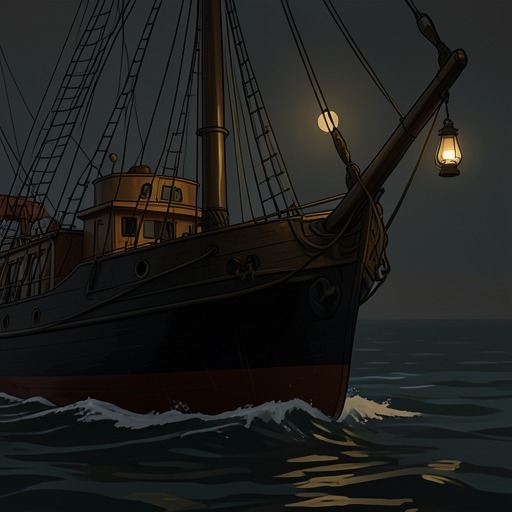
The quay belongs to a town whose arrival by sea can feel both public and isolating. When Anna Wetherell reaches Hokitika aboard the Godspeed, she stands alone on deck while the ship works through river-mouth traffic and waits for a signal from Gibson Quay before approaching the wharf. From the water, Hokitika appears smaller and more exposed than Dunedin, its waterfront buildings made wretched-looking by strings of red and yellow bunting. The approach places the quay between the shelter of the harbour and the ocean’s more intimidating openness: it is where a traveller first confronts the town, but not necessarily where arrival brings security.
The quay is also connected to the roads and settlements beyond the waterfront. At dusk, Sook Yongsheng and Quee Long walk down the Kaniere road towards Hokitika, with the ocean already audible beyond the town. Their conversation concerns the Aurora mine and the disappearance of its apparent gold. The scene does not place the men on the quay, but it helps establish the routes that converge on Hokitika: movement between goldfield, Chinese settlement, town, and port is part of the same unsettled economy.
A brass hand-bell announces work at the waterfront. When Benjamin Löwenthal tells Te Rau Tauwhare that the Godspeed has finally been hauled out of the water, he says that hands are needed to clear her cargo. The bell had sounded an hour earlier, and the call offers Tauwhare a chance to earn money while putting someone connected to the investigation near the ship. The quay is thus not only a point of departure and delivery; it is a place where information and employment circulate alongside freight.
The missing crate and the fortunes it carries
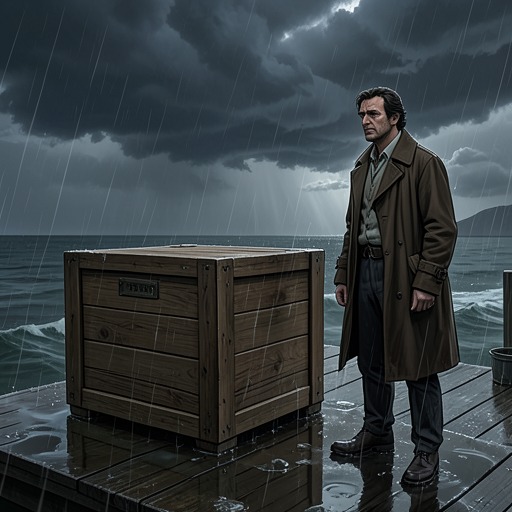
Gibson Quay is central to the history of a shipping crate that contains more than its outward description suggests. Roughly nine months before the present action, Francis Carver has taken the Godspeed from Alistair Lauderback through fraud and coercion. The crate connected to that transaction holds Lauderback’s documents and personal effects, including the ship’s bill of sale, which might serve as leverage against Carver. Carver’s attempt to recover a fortune concealed in a trunk of dresses is bound up with the same wider chain of shipping, identity, and mislaid property.
The dresses conceal approximately four thousand pounds in pure gold, meticulously sewn into their linings by Lydia Wells while she is posing as Carver’s wife. After the crate is lost, Carver sails to Hokitika, apparently supposing it may have been delivered there by mistake. He advertises a substantial reward for its safe return in the West Coast Times, using the name Crosbie Francis Wells and a birth certificate to support that identity. The advertisement turns the quay’s missing freight into a public puzzle: the search depends on a false name, while the object sought contains wealth whose true history is still obscure.
The crate’s disappearance also reshapes Lauderback’s choices. Some days after the Godspeed is wrecked, Thomas Balfour confesses that the crate disappeared from Gibson Quay because of a mistake in lading for which no individual appears responsible. Lauderback receives the news without much interest. With his ship ruined, he no longer has a reason to use the bill of sale as leverage against Carver. The loss is therefore not simply a gap in a cargo record: it removes a possible instrument of coercion at the very moment the ship that made the document useful has been destroyed.
Wreck, salvage, and changing ownership
The Godspeed’s fate shifts the waterfront from a place of shipping to a scene of recovery. After grounding on the shifting Hokitika bar, the barque is gradually moved into shallower water by two large tugboats. Her hull is lifted onto rollers and brought flush with shore; at low tide, harnessed Clydesdales and a winch haul her clear of the surf. By the time Löwenthal sees her, all three masts have broken off at the base, and the ship lies stripped of sails and rigging on the spit, awaiting the removal of her cargo and fittings. She is then to be dismantled and sold piece by piece for salvage and repair.
The wreck is associated with the wider consequences of gold extraction. Lauderback regards the Godspeed’s destruction as proof that Westland is cursed against him, but the narrative also gives the hazard a material cause: silt and gravel from claims upstream travel down the Hokitika River and accumulate at the river mouth in patterns that change with the tide. The bar’s danger is therefore not separate from the goldfields. The work that promises wealth alters the harbour through which people and goods must pass, making the ship’s wreck a consequence of a landscape continuously reshaped by mining.
When the cargo is to be cleared, the quay again becomes a point of access to the ship’s uncertain contents. Löwenthal proposes sending one of his own men to watch the operation, partly because of the missing shipping crate and partly because Walter Moody has described what he thought he saw below. He asks Tauwhare to act as their eyes and ears, offering him a plausible reason to be present. Tauwhare refuses, having privately pledged never again to transact with Carver. The refusal gives the salvage work a second significance: even as the ship is being reduced to cargo, fittings, and saleable timber, the people drawn to it remain bound by loyalties and promises that cannot be recovered with the freight.
Warehousing, departure, and the novel’s material crossings
The quay also serves as a place to leave things behind. When Moody prepares to depart Hokitika, he arranges for his trunk to be kept at Clark’s Warehouse on Gibson Quay and directs that any private mail be sent there. He pays three silver shillings at the Crown’s front desk for the arrangement, leaves his key, and gives a fourth shilling to the maid who has served him for three months. Then he walks north from the hotel with his swag and tent roll, eventually noticing another man on the road ahead. The warehouse arrangement makes the quay a point of future contact, even as Moody physically removes himself from town.
Across these episodes, Gibson Quay gathers objects whose meanings exceed their immediate uses: freight becomes evidence, a bill of sale becomes leverage, a trunk of dresses becomes a hidden fortune, and a wrecked vessel becomes salvage. The objects pass through systems of shipping and storage that promise orderly custody, yet the crate is lost through an untraceable mistake and the Godspeed is claimed by a shifting bar. The quay gives these reversals a concrete setting. It is where Hokitika’s ambitions meet the limits of transport, and where the novel repeatedly shows wealth depending on fragile chains of possession, information, and movement.